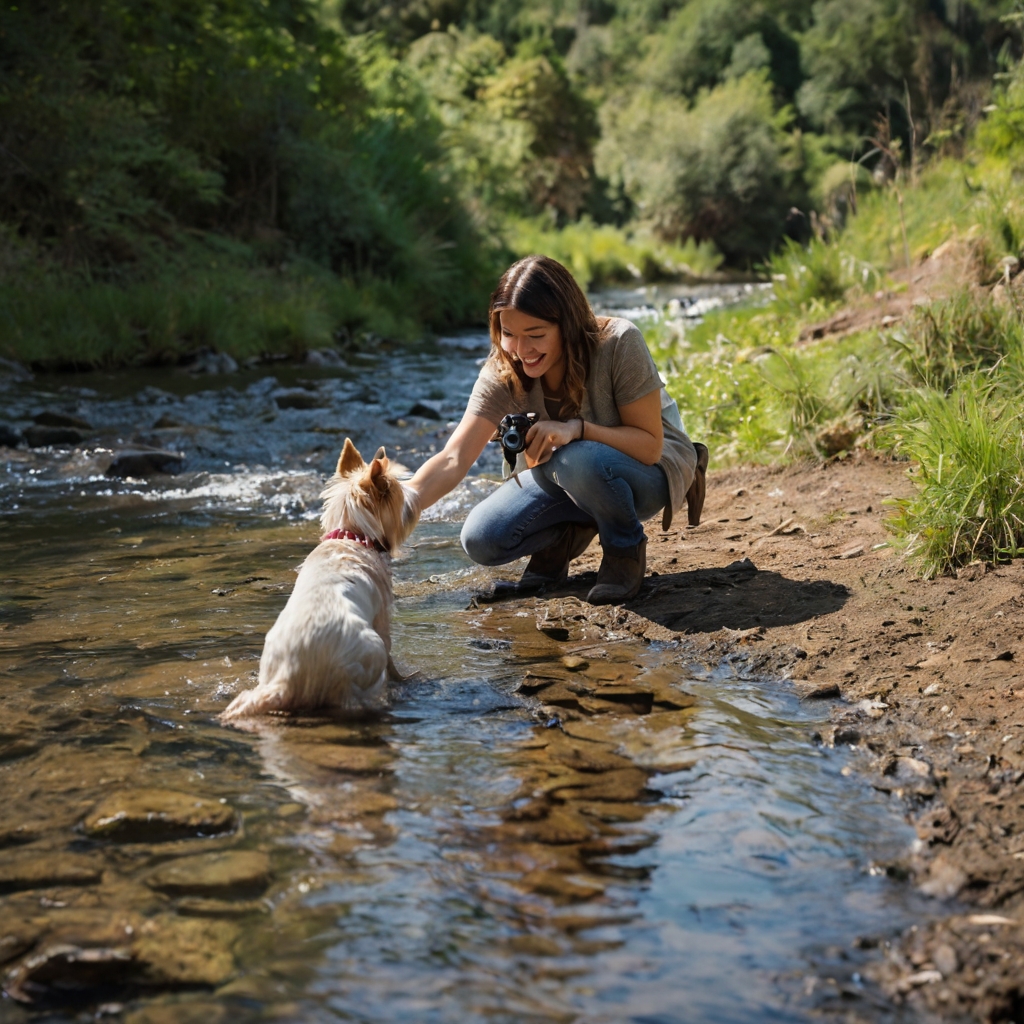
Here at Paws & Paths in Dorchester, we love seeing your perfect pet pictures, Photographing pets can be a delightful and rewarding experience, especially in the great outdoors of Dorchester where natural light and beautiful settings provide the perfect backdrop. However, capturing the perfect shot requires patience, creativity, and a few handy tips. Whether you’re a seasoned photographer or a pet parent looking to snap some great pictures of your furry friend, these tips will help you take stunning outdoor photos of your pets.
Choosing the Right Camera Settings
1. Use a Fast Shutter Speed:
- Tip: Pets can be unpredictable and quick. A fast shutter speed (1/500 second or faster) will help freeze the action and prevent blurry photos.
- How To: Set your camera to Shutter Priority mode (S or TV) and choose a high shutter speed.
2. Adjust the Aperture:
- Tip: A wide aperture (low f-stop number, like f/2.8 or f/4) creates a shallow depth of field, making your pet stand out against a blurred background.
- How To: In Aperture Priority mode (A or AV), select a low f-stop to achieve this effect.
3. Use Continuous Shooting Mode:
- Tip: Pets often move quickly and unpredictably. Continuous shooting mode (burst mode) allows you to take multiple shots in quick succession, increasing your chances of capturing the perfect moment.
- How To: Enable continuous shooting mode in your camera settings.
4. Focus on the Eyes:
- Tip: The eyes are the most expressive part of your pet. Ensuring they are in sharp focus will make your photos more engaging and lively.
- How To: Use single-point autofocus and aim for your pet’s eyes when taking the shot.
Finding the Best Angles and Composition
1. Get Down to Their Level:
- Tip: Photographs taken from a pet’s eye level are more intimate and engaging. Get down on the ground to capture their perspective.
- How To: Kneel, crouch, or lie down to match your pet’s height.
2. Fill the Frame:
- Tip: Filling the frame with your pet minimizes distractions and keeps the focus on them.
- How To: Move closer to your pet or use a zoom lens to get a tighter shot.
3. Use the Rule of Thirds:
- Tip: The rule of thirds helps create balanced and interesting compositions. Imagine your frame divided into nine equal parts by two horizontal and two vertical lines. Position your pet along these lines or at their intersections.
- How To: Enable the grid feature on your camera or smartphone to assist with composition.
4. Capture Action Shots:
- Tip: Action shots can showcase your pet’s personality and energy. Capture them running, jumping, or playing for dynamic and lively photos.
- How To: Anticipate their movements and use a fast shutter speed to freeze the action.
Keeping Pets Engaged
1. Use Treats and Toys:
- Tip: Treats and toys can grab your pet’s attention and keep them focused. Use them to direct their gaze or encourage specific behaviors.
- How To: Hold a treat or toy near the camera lens to make your pet look towards it.
2. Be Patient and Calm:
- Tip: Pets can sense your energy. Staying patient and calm will help keep them relaxed and cooperative.
- How To: Take breaks if your pet seems stressed or disinterested. Allow them to explore and play between shots.
3. Capture Natural Behaviors:
- Tip: Some of the best photos come from capturing your pet’s natural behavior and expressions. Let them be themselves.
- How To: Observe your pet and wait for moments that showcase their personality.
4. Enlist a Helper:
- Tip: Having a friend or family member assist you can make the process smoother. They can help keep your pet engaged and positioned while you focus on taking photos.
- How To: Coordinate with your helper to use toys, treats, or commands to direct your pet’s attention.
Utilizing Natural Light
1. Shoot During Golden Hours:
- Tip: The golden hours (shortly after sunrise and before sunset) provide soft, warm light that enhances the quality of your photos.
- How To: Plan your photo sessions during these times for the best lighting conditions.
2. Avoid Harsh Midday Sun:
- Tip: Harsh sunlight can create strong shadows and make your pet squint. Opt for shaded areas or overcast days for softer lighting.
- How To: Position your pet in open shade or wait for a cloud to diffuse the sunlight.
3. Use Backlighting for Drama:
- Tip: Backlighting can create a beautiful halo effect around your pet’s fur. Position the sun behind your pet and expose for their face.
- How To: Adjust your exposure settings to prevent your pet from becoming a silhouette.
Conclusion
Capturing the perfect outdoor shot of your pet involves a mix of technical skills, creativity, and patience. By choosing the right camera settings, finding the best angles, keeping your pet engaged, and utilizing natural light effectively, you can create beautiful and memorable photos that highlight your pet’s personality and charm. So grab your camera, head outdoors, and start capturing those picture-perfect moments with your furry friend!
 Paws & Paths, Dorchester